by Stacy Simonyi & Tania Campanelli. They are the authors of Positive Classroom Communities.
It’s already August, and for many of us, that means heading back to school. It’s time for inservice sessions to learn new programs, complete icebreaker activities, districtwide kickoffs with inspirational speeches, catching up with colleagues, and meeting new staff. And somewhere amid the rush and chaos of it all, classrooms will need to be set up and first weeks planned out. It’s a lot to pack into a short time period!
However rushed, back-to-school is also the time for reflection; thinking through ways to set up the classroom systems and environment which will set the stage for your classroom’s overall culture. For us, this means focusing on ways to incorporate SEL into our schedules to start building positive classroom communities from the very first day. We consider the books we’d like to read during the first weeks, plan the community-building activities that foster connection, and determine discussion prompts for our group meetings.
If you are new to SEL, this might feel challenging, especially getting started during this back-to-school whirlwind of activity. But starting SEL practices right away is an opportunity to welcome students to the new school year and set the expectations for the year to come.
Now, perhaps you are thinking–I don’t have time to think about adding something new. Or I’m already learning a new math/literacy/science/social studies curriculum; I don’t have the bandwidth for SEL right now. We hear you. The back-to-school preparation is a lot, all at once. But hear us out: incorporating SEL into your classroom doesn’t have to be stressful, cumbersome, take a lot of resources, or be separate from everyday teaching. It just takes intentional planning. And while we encourage using back-to-school for this intentional reflection and planning, there really isn’t a wrong time to start incorporating SEL into your planning!
Ideas to Get Started
Here are a few general practices that can help you start right from the beginning of the year. We have selected these as you can do them with limited resources, aren’t cognitively heavy (meaning that they don’t take a lot of cognitive bandwidth to begin or sustain), and are hugely impactful, addressing multiple SEL components.
Photo wall: Have each student bring in or find a picture that brings them joy. This could be a person, place, or an object.
This activity addresses the following CASEL components:
- Self-awareness: Bringing in a photo that has meaning is a way to have students share part of their identity. Seeing the photo on the wall reminds them of who they are and what they find joyful.
- Self-management: Coaching students to look for their “joy” photo on the photo wall when they are experiencing an emotion that doesn’t feel great in their bodies (sadness, anger, frustration, etc.) may help them find calm.
- Social awareness: When students listen to others share their “joy” pictures, it helps them build their skills of empathy and understanding. Seeing themselves in the classroom also creates a deeper sense of belonging.
- Relationship skills: Bringing in photos can help students find connection with others. The photos become a way to create conversations and build relationships.
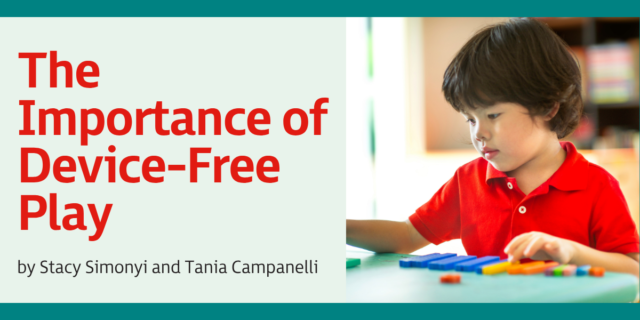
Play: There are so many ways to engage children in device-free play! Guided play could be playing games as a whole class (for example, Red Light, Green Light) or having students play games in small groups (for example, board games). Encouraging time for free play (beyond recess), especially at the beginning of the year, is incredibly beneficial for both the students and the teachers. It helps students feel more comfortable in their new environment, and it helps them connect with each other, all while giving teachers the opportunity to observe them and gather important information about their temperament - how do they communicate with others, how do they handle victories and losses, can they sustain attention, etc.
This activity addresses the following CASEL components:
- Self-management: Play is a great way to help students practice emotional regulation and goal-setting. In competitive games, students learn and practice how to be gracious when they win or don’t win. This can take a lot of self-regulation! Emotional regulation happens in free play as well, especially when other children enter the play who might not see it the same way, leading to negotiation and compromise. Children also set goals during play and create a “play plan” to work toward those goals. Whether the goal is making a rocket ship using loose parts in the classroom or determining how many flavors are in their “ice cream shop,” children enter play with an idea or a goal to work toward. Goals and plans are often adjusted as play continues, further demonstrating self-management skills.
- Social awareness: Whether guided or free play, students need to follow the “rules” of a game. In guided play, those rules are explicit, whereas in free play the rules might evolve and change as the play changes. This translates into the social realm as children navigate social “rules” and norms.
- Relationship skills: In play experiences, children learn how to navigate working together toward the same goal, which involves learning and practicing how to communicate with others. Also, friendships are often made during play!
- Decision-making skills: Many decisions are made during play. In games based on strategic thinking, such as board or card games, students have to think ahead and use information to make a decision. In free play, children need to work collaboratively to solve problems that arise.
Calm Corner: Create a space in the classroom for students to regain focus and self-regulate when they are experiencing big emotions.
This activity addresses the following CASEL components:
- Self-Awareness: For children to recognize that they are in an emotional state that pulls their focus away from schoolwork–or just notice when they need a short break–they need to be self-aware.
- Self-Management: Calm corners are intended to create spaces where children, overwhelmed by emotions, can find materials to self-regulate. They inherently help students learn self-management skills.
- Social Awareness: When others enter the calm corner, students learn that their classmate needs time to be ready to play or return to classwork. It can help them begin to recognize the emotions of others, which can lead to building empathy.
When you view your classroom through an SEL lens from the very beginning of the year, the practices become part of the classroom routine and you are more likely to sustain them. They become part of your classroom’s culture. Part of your intentional practice. The three aforementioned general practices may seem simple in the sense that you may have already heard of them and they are easy to implement into your classroom routines; however, they are hugely impactful. By taking a little bit of time to purposefully find space in your room to create a calm corner, to plan for students to bring in photos, and to schedule play time, you are already starting your SEL journey.
Want more practices and activities to help you build a classroom culture rooted in SEL? Check out Positive Classroom Communities!