Much like the diet phenomenon Eat This Not That, this series aims to replace some common, existing teaching practices with approaches that are more effective—healthier, if you will—for our students. We hope to draw attention to widespread practices around important instructional topics that have little support in research or professional wisdom and offer alternatives that have greater support. Each text is collaboratively written by authors representing research and practice. By the end of each book, you will understand both what not to do, and what to do, to improve student learning.
Literacy
No More Reading for Junk
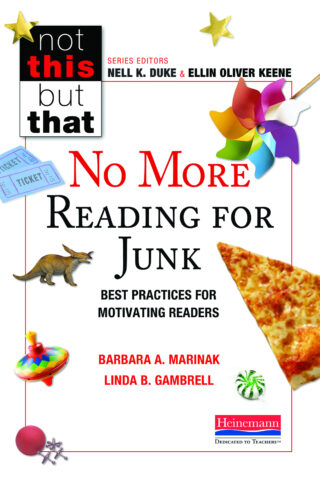
Pizza. Pez dispensers. Nerf balls. When we give students “junk” to reward reading, we are focusing their intention away from the act of reading and from their own independence as readers. Instead, we can create classrooms where reading is seen as its own reward. In this book, esteemed researcher Linda Gambrell provides a research-based context for cultivating children’s intrinsic motivation to read and identifies three essential principles, the “ARC” of motivation: access, relevance, and choice.
No More Teaching a Letter a Week
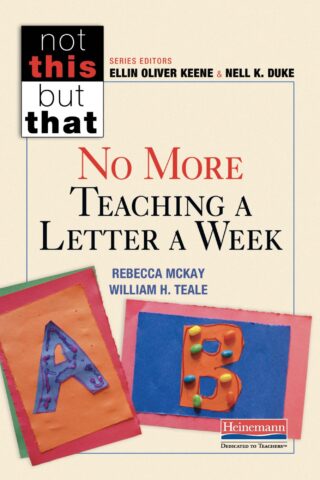
“Letter-a-week” may be a ubiquitous approach to teaching alphabet knowledge, but that doesn’t mean it’s an effective one. In No More Teaching a Letter a Week, early literacy researcher Dr. William Teale helps us understand that alphabet knowledge is more than letter recognition, and identifies research-based principles of effective alphabet instruction, which constitutes the foundation for phonics teaching and learning. Literacy coach Rebecca McKay shows us how to bring those principles to life through purposeful practices that invite children to create an identity through print.
No More Summer Reading Loss
Everyone loves summer—except reading teachers. Kids take a vacation from books and those with limited access to books lose ground to their peers. You may have thought there’s nothing you can do about it, but there is. No More Summer-Reading Loss shows how to ensure that readers continue to grow year round. School-based practitioners Carrie Cahill and Kathy Horvath join with renowned researchers Anne McGill-Franzen and Dick Allington to help you make summer readers out of every student.
No More Random Acts of Literacy Coaching
Teacher-coach collaboration is critical to teacher effectiveness and student learning, but sometimes the in-the-moment response rate required when supporting several teacher requests at once can make literacy coaching appear to be, well, rather random. When literacy coaching is intentional, carefully planned, and a collaborative team effort with teachers and principals, the results are dramatic. Student literacy growth increases, and the number of students needing intervention decreases. Learn how your team can work together to accelerate student success.
Stem
No More Math Fact Frenzy
No More Math Fact Frenzy examines this research and concludes that our approaches to math fact instruction are often ineffective. We want our students to know their math facts. We know they’re better mathematicians when they’re comfortable with them. Yet the ways we ask students to learn them in many classrooms remain unproductive. They share recommendations for all three phrases: activities and games that build number sense, strategies that lead to flexible thinking, and ways to create and sustain a classroom culture of fluency. This kind of teaching helps students learn their math facts more successfully—and with less stress and anxiety.
No More Science Kits or Texts in Isolation
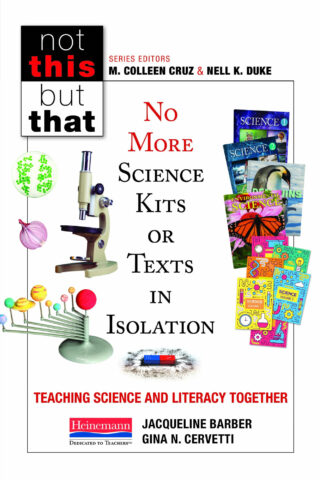
Using research as their guide, Jacquey and Gina show you how to integrate science and literacy learning in a way that reflects the authentic ways scientists work. Throughout the book, they describe research that supports each principle and share examples of effective integration in the classroom that enhance students’ science learning, reading and writing growth, and motivation. To avoid the trap of textbook-only science or inquiry-only science, we need to aim for synergy – engaging students in using firsthand experiences and text-based experiences as connected parts of investigating questions about the natural world.
Technology with Intention
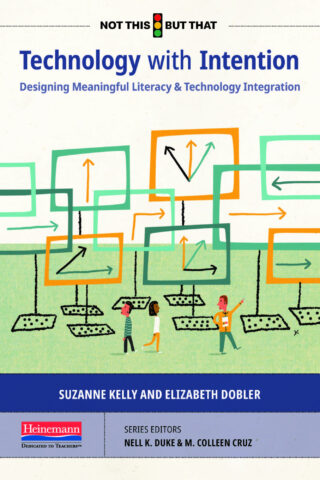
With constant upgrades, innovations, and new capabilities, in some ways technology has never been more overwhelming. It’s easy to get lost in the abundance of options and steadily increasing administrative demands. Suzanne and Beth offer a path that puts teachers in charge, pairing research on literacy and technology with practical, actionable advice to help you bring quality instruction and technology together. While there are books that show you how to include tech, Technology with Intention also addresses how to decide whether to use tech at all. Intentional is the key word for integrating technology into instruction, and you will find helpful guidelines and prompts to help you decide when, how, and why to use technology with your students.
Classroom Management
No More Mindless Homework
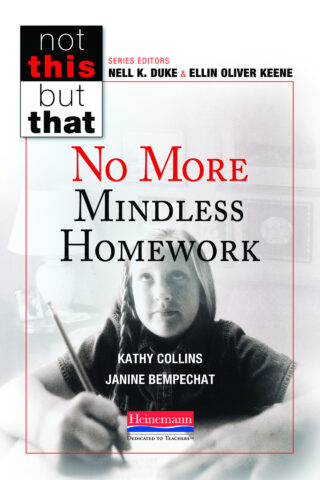
While schools around the nation reconsider homework policies, teachers, students, and parents continue to ride the wave of either too much, too little, too easy, or too hard homework assignments. In the expectation that children complete homework, sometimes they are assigned mindless “busy work.” Kathy Collins and Janine Bempechat take on the stormy topic of homework by re-focusing the conversation from “to assign or not to assign” to how we can design engaging homework that harnesses children’s interests and fosters their learning. “Janine and I give you a research-based rationale and a more expansive view of homework that enables you to envision meaningful alternatives to worksheets, packets, and tasks that simply occupy children’s afterschool time,” Kathy writes. As Janine notes, “More than just ‘getting it done,’ homework can be an opportunity to foster positive beliefs about learning, establish meaningful habits of mind, and forge an academic identity.”
No More Telling as Teaching
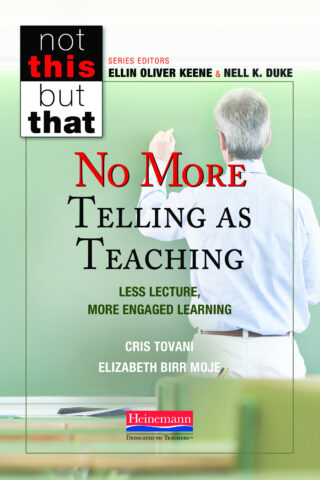
The truth is, when we rely on lecture in an effort to cover content, we’re doing students a disservice. Although lecture can be engaging and even useful, lecture alone cannot give kids real opportunities to learn, retain, and transfer the disciplinary ideas, skills, and practices we’re trying to teach. Cris Tovani and Elizabeth Moje help us translate the time spent lecturing into powerful learning experiences where students interact and inquire into topics that matter. Their research-based alternatives help you create the conditions for engaging, relevant work that’s inherently interesting and sparks critical thinking.
No More Taking Away Recess
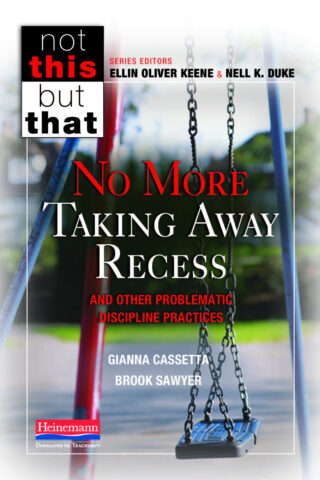
Frustrated by ongoing difficult student behavior? You’re not alone: classroom management issues are a leading cause of teacher burnout. But there is a solution. No More Taking Away Recess and Other Problematic Discipline Practices shows how to promote good behavior, address interruptions, and keep everyone moving forward. “Management and control are not the same,” write teacher and school leader Gianna Cassetta and noted researcher Brook Sawyer. If trying harder to exert control is sapping your energy, watch as they show how to transition away from the roles of disciplinarian or goody dispenser and toward an integrated, professionally satisfying model for classroom management.
No More Culturally Irrelevant Teaching
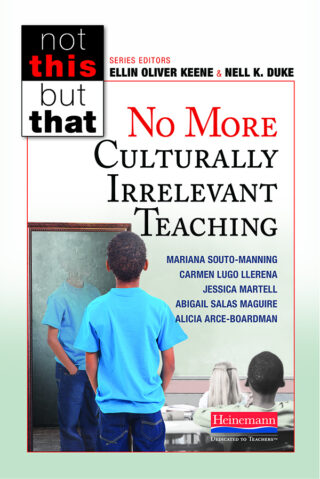
Culturally relevant teaching is essential, now more than ever. If we want children to develop as successful learners, we must communicate that they belong in our classrooms. They need to see themselves, their cultures, their families, and their communities reflected in the materials and resources they find there. Culturally relevant teachers honor students’ identities by positioning them at the center of teaching and learning. Each and every day, they make sure children and their families feel that they belong in school. They include multiple perspectives and points of view in the curriculum.
Tuned-In Teaching
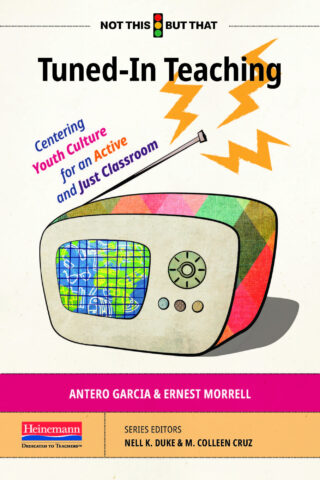
In Tuned-in Teaching, Antero Garcia and Ernest Morrell offer a road map for creating a classroom that is transformative for your students and revitalizing for you. They explain why students play an integral role in turning classrooms into spaces for greater engagement and innovation. By tuning in to youth culture and the lives of students, we become more connected to their needs and ways of learning.
No More Teaching Without Positive Relationships
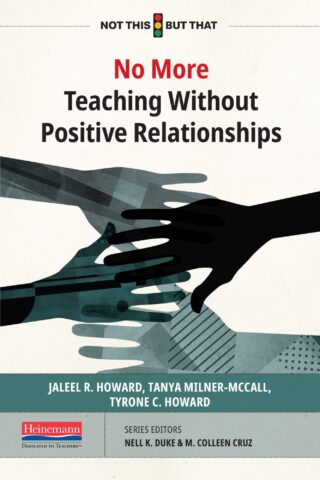
Teachers know the importance of strong relationships with their students, but sometimes connecting with them feels challenging. No More Teaching Without Positive Relationships reviews the teacher-student relationship research and provides practices for building relationships that make a difference. Positive teacher-student relationships do not just transform student learning—they also create more stimulating and caring classrooms. A true relationship is dynamic, often requiring a change in behaviors and mindsets. It can be intense work, but it is the kind of work that can change a student’s life.
Trauma-Responsive Pedagogy
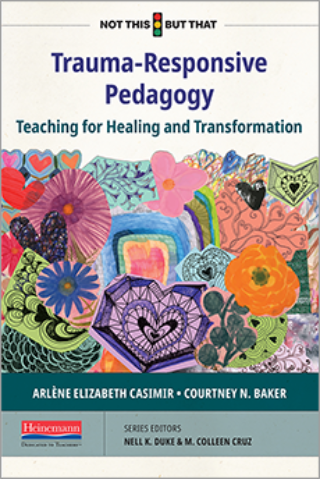
Trauma-Responsive Pedagogy explores the research and practices around trauma-informed education in an easy-to-digest, actionable text that elevates the healing and wellness of both the children and the adults in our classrooms. It describes the challenges of a classroom that does not attend to adversity and trauma, then presents the research on trauma-responsive classrooms, and finally provides an inclusive framework that supports educators in centering the whole child in their classrooms—offering a recipe for what to do next period, next week, and next school year. Pedagogy that is trauma-responsive invites us to heal alongside our students while explicitly elevating evidence-informed teaching methods and practices and facilitating the necessary inner work to bring our whole being to the profession in healthy ways. Our students’ challenges are not a deterrent to their learning. Together, we can turn wounds into wisdom.