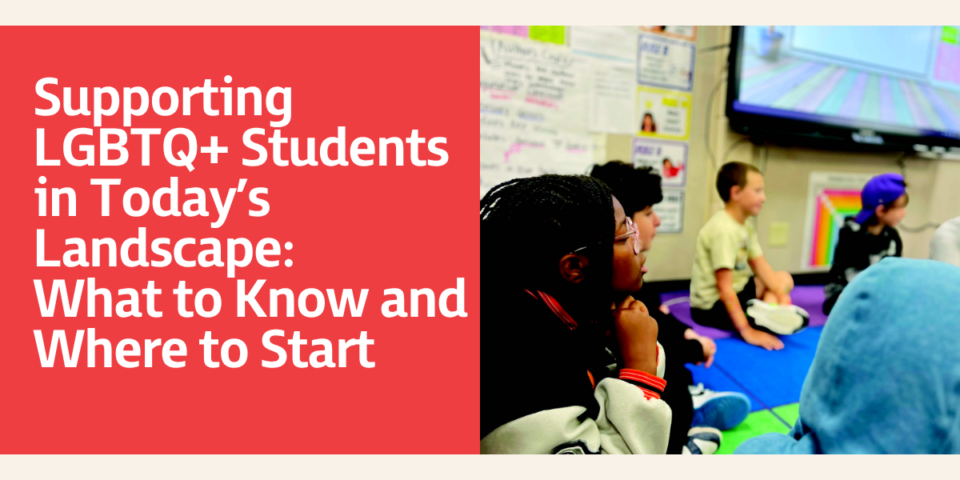
Adapted from Scott Sundstrom's forthcoming Creating Safe & Welcoming Classrooms for LGBTQ+ Students. Pre-order available now!
We cannot ignore where we are right now. In this moment, queer existence is under threat in many ways. The current landscape continues to shift, and often in ways that feel increasingly hostile.
Every day that I turn on the television to watch the national news or scroll on my phone through headlines, I feel overwhelmed. Reading these headlines, it’s hard not to feel disoriented, even hopeless. The sheer volume and intensity of the attacks on public education can feel like too much to process.
The information is difficult to sift through, and everything seems to change by the hour. If you’re feeling tired, disillusioned, or even afraid, you’re not alone. Many of us are carrying the weight of these pressures while still showing up for our students every day.
Now more than ever, we must create classrooms where LGBTQ+ youth are affirmed, seen, valued, and celebrated. And this isn’t just about LGBTQ+ students—when we create these inclusive spaces, every child benefits. Affirming LGBTQ+ students:
- creates safer, more supportive learning environments for all students
- models respect, empathy, and kindness toward all identities
- supports mental health and reduces anxiety for all
- encourages all children to be authentic and confident in who they are
- prepares students to thrive in a diverse and inclusive society
Understanding the Policies That Shape Our Classrooms
As educators, we must be aware of the political climate in which we are teaching and understand how specific policies and decisions impact what happens in our schools and classrooms. Executive orders, laws, and school board decisions impact our daily work. They affect real teachers, real students, and real families every single day.
There are a few key areas of policy and governance that shape public education today: federal executive orders, state laws, academic standards, anti-bullying statutes, and book bans. Together, these policies offer an overarching view of what’s happening in education throughout the country, and how they are showing up in your state, your district, and your classroom. Staying informed helps us better educate our students, advocate for them, stay aligned with our core values, and make informed and intentional decisions about our teaching.
Federal Executive Orders
Executive orders are legally binding directives issued by the president to federal agencies. Although they do not require congressional approval, they can have wide-reaching consequences when they affect funding, federal guidance, and regulatory enforcement. Executive orders pertaining to education can influence what is prioritized (or prohibited) in schools, impact curriculum guidelines, and alter the rights and protections of students and staff. (See pages 4-9 of the book for a list of 10 key executive orders.)
These executive orders aim to restrict what can be taught in public schools by banning curriculum deemed “anti-American,” specifically targeting content related to race, gender, and systemic inequality. Collectively, they signal a significant shift in federal education policy, with sweeping effects on school environments, curricula, and the rights of students and educators, particularly those who have identities that have been marginalized, such as people of color and those who identify as LGBTQ+.
State Laws
Beyond executive orders that shape national policy, state laws play a critical role in determining how LGBTQ+ topics and perspectives are addressed in schools. When state law and federal executive orders come into conflict, it’s typically state law that prevails—particularly because executive orders cannot override existing state statutes. If they attempt to do so, they can be challenged in court, and in many cases, the state law is upheld.
The contrasting approaches to policy at the state and federal levels have real, measurable impacts on the well-being and success of LGBTQ+ students in schools. Research consistently shows that when schools implement effective supports, LGBTQ+ students experience less bullying, greater feelings of safety, and improved academic outcomes (Kosciw et al. 2020). On the other hand, restrictive laws and policies are linked to higher rates of mental health issues, including anxiety and depression, and to higher school dropout rates among LGBTQ+ youth (Hatzenbuehler 2011; Russell and Fish 2016).
Inclusive Curricular Standards Policies
In addition to broader state laws, curricular standards also affect what is taught in classrooms. Some states have adopted inclusive standards that require teaching about LGBTQ+ people, events, and perspectives, while others have enacted laws explicitly prohibiting teaching about these topics. These mandates not only influence curriculum materials but also how educators approach topics related to identity, history, and civic life. Knowing your state’s curriculum policies is essential. What’s required (or restricted) by your state shapes what you can teach and how you support your students.
Anti-Bullying Policies
In addition to curriculum standards, another critical area where state policy directly affects LGBTQ+ students is bullying and harassment prevention. Check the HRC School Anti-Bullying State Map online to learn about anti-bullying protections in your home state. Consider how these laws—or the absence of them—shape the experiences of LGBTQ+ students in your school community.
Banning Book Bans
While anti-bullying policies are crucial for protecting LGBTQ+ students’ health and well-being, another important fight for LGBTQ-inclusive education is access to a diverse range of books and resources. These protections ensure that students have access to stories where they see themselves reflected and can learn about the diverse experiences of others. Maintaining access to inclusive literature helps all students foster empathy, understanding, and a sense of belonging.
Together, these federal executive orders, state laws, curriculum standards, anti-bullying policies, and book bans reveal the tumultuous educational and political landscape across the country. While recent federal orders have introduced widespread changes that threaten LGBTQ+ inclusion, equity, and safety in schools, many state and local leaders are pushing back—defending civil rights, affirming student identities, and safeguarding inclusive education.
Across the nation, educators, families, advocates, and students are showing up every day to protect the dignity and safety of LGBTQ+ youth. Understanding our current reality is not just about staying informed; it’s a crucial step for anyone committed to creating safe and inclusive schools where all students feel safe, valued, and heard.