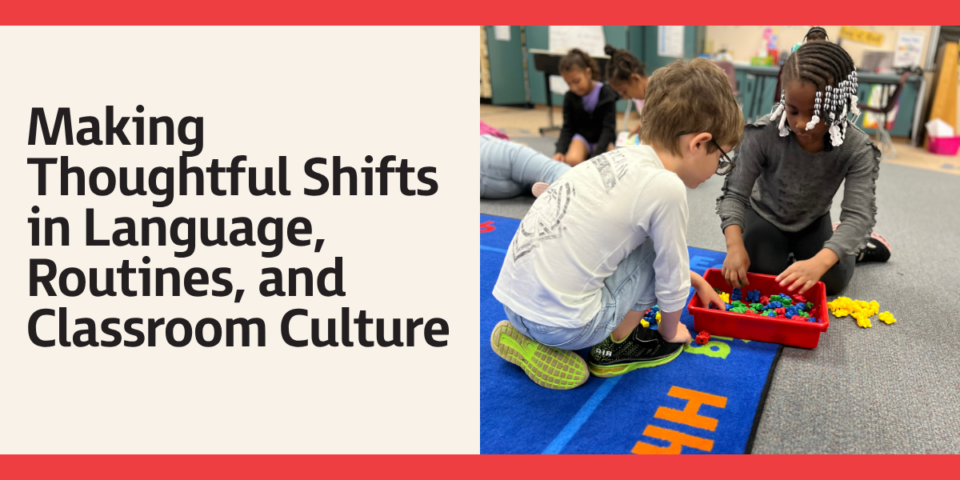
Adapted from Scott Sundstrom's Creating Safe and Welcoming Classrooms for LGBTQ+ Students.
We can disrupt heteronormativity by introducing inclusive alternatives through disruptive tinkering. Disruptive tinkering borrows from Jon Wargo’s (2019) ideas on “tinkering” and Kevin Kumashiro’s (2000) ideas on “disruptive education,” disruptive tinkering is a way to make small but meaningful shifts to inclusivity. It means tweaking or adjusting routines to interrupt gender binaries, challenge what is considered “normal,” and disrupt the status quo. (Read the previous blog for more on disruptive tinkering.)
These small shifts in language, student grouping, partnerships, and classroom practices are a starting point for creating a safer, more inclusive environment for all students.
Rather than asking you to do something entirely new, let’s try a few simple replacements, switching out a current practice with a more inclusive alternative. Here, we will focus on a few areas in which I often see heteronormativity at work in classrooms: the language we use when we talk to and about students and their families, the ways in which we call on students, and the ways in which we group students and assign seats, as well as color coding by gender, managing uniforms and dress codes, determining bathroom policies, and using curriculum.
Disruptive Tinkering in Language
Inclusive language is essential for the well-being not only of gender-expansive students but for all students. Using inclusive language cultivates a welcoming environment where students perceive that their different identities, backgrounds, and home lives are respected and valued in the classroom, and that they belong.
Alternative Wording
When you’re trying to make a shift in language, it can be helpful to have alternative wording at the ready. To avoid using boys and girls or ladies and gentlemen, you might try . . .
To avoid referring to the adults who are raising your students only as mom and dad, you might try . . .
Disruptive Tinkering When Calling on Students
Rethinking how we call on students can create a more inclusive learning environment. It can not only interrupt the gender binary and challenge gender-based stereotypes, but also reduce anxiety, encourage more participation, and ensure all voices have an opportunity to be heard. Consider trying the following strategies:
- pulling sticks to have students respond but giving them the option to “pass” if they do not want to answer
- having your students turn and talk, listening in to what they have to say, and then calling on students who you know have a strong response to the question to share with the whole group
- giving more wait time to allow all students to process the question. Over time, you’ll notice more students feeling comfortable raising their hands to participate.
Disruptive Tinkering When Grouping Students and Assigning Seats
Your decisions regarding where students sit in your classroom directly impact who they work with during both whole-group instruction and independent practice—though they may have more flexibility in choosing partners for independent tasks. When you want to give students spots on the carpet or seats at tables or desks, try considering:
- student readiness levels
- student personalities
- student work styles
- student choice
When you need to organize the class into groups, try grouping by:
- alphabetical order (dividing into equal groups)
- offering a choice between two favorite things (Admittedly, this takes a little thinking ahead of time: You’ll need to ensure that the favorite things don’t play into binary gender norms and that the class will be more or less equally divided about their favorites.)
- birthday months
- clothing color
- student interests
- student achievement on a particular skill or strategy (heterogeneously grouped)
- student choice
These groupings work for any situation when you need to organize students into groups, large or small—including when it’s time to line up for a whole-class bathroom break. While it may feel more efficient to separate students into “boy” and “girl” lines for bathroom breaks when bathrooms are gendered, doing so reinforces the gender binary and can exclude nonbinary and gender-expansive students. By moving away from gendered separations, we foster inclusivity and send the message that all identities—regardless of gender—are safe and valued at school.
When you need to organize students into partnerships, try:
- random pairing using tools such as a wheel of names, name sticks, or playing cards (asking students to find the other person who has a card of the same color and number)
- strategic pairing to bring together students of different achievement levels or students who may not know each other well
- student choice.
Classroom Jobs
At first glance, classroom jobs may not seem overtly gendered, but subtle associations can have a powerful impact on how students view themselves and their roles. For example, when girls are routinely asked to organize materials or take on more nurturing tasks (e.g., Absent-Student Helper), while boys are given leadership roles or asked to direct group activities (e.g., Line Leader), these assignments can reinforce traditional gender-based stereotypes about what boys and girls “should” do. Girls may become less likely to see themselves as leaders, while boys might feel discouraged from taking on tasks that require collaboration or compassion. Over time, this can influence how students perceive their own abilities and roles in the classroom and beyond.
Disruptive Tinkering with Dress Codes and Uniforms
In your classroom, you can support your students’ gender expression by encouraging them to wear what feels authentic to them while still adhering to the school guidelines. You might consider reading a story with a protagonist who defies traditional gender-based clothing to get the conversation started. Two great books I have used in my classroom for this purpose are Sparkle Boy by Lesléa Newman and Annie’s Plaid Shirt by Stacy B. Davids. Moreover, when commenting on student clothing, use inclusive language. For example, instead of saying “girls in dresses,” you might say, “students in dresses.” Also, avoid statements that are gendered praise, like “you look like a little gentleman.” Although well intentioned, this type of praise can reinforce stereotypes and make students who do not align with traditional gender-based stereotypes feel excluded.