Think about a typical school day for one of your students: a lab procedure in science, a primary source excerpt in social studies, a short story in ELA. Three completely different reading tasks before lunch. If we want kids to succeed with all of that reading, every teacher who hands them a text needs to be ready to teach the comprehension strategies that discipline demands.
In science, students encounter texts that are dense in a way that can challenge even a confident reader: specialized vocabulary that can't be inferred from context, diagrams and insets that carry as much meaning as the paragraph text, and a structure that doesn't move in a straight line. Students need a toolkit of strategies—step-by-step how-tos—that help them tackle the demands of the text: previewing a page before reading it line by line, unpacking a diagram alongside the surrounding text, and pulling critical information from charts, images, and insets instead of skimming past them.
Social studies asks something different: dates and timelines, multiple perspectives on the same event, letters, speeches, and other primary source artifacts with unfamiliar syntax and context. Sometimes a personal narrative is woven into the informational text, so kids hold two reading modes at once: sequencing events, reading sources skeptically, and recognizing whose voice they're hearing and why it matters. They need to be taught strategies that help them put events in order, compare opposing viewpoints, and separate fact from personal perspective.
In ELA, the demands shift again: probing character motivation, tracking story arc, noticing how craft choices build theme. That work is rigorous, but it isn't the work students do in a lab report or a treaty excerpt, which is exactly the point. If ELA is the only place we teach reading strategies, kids miss out on the skills they need to deeply understand texts in every other subject.
In addition to strategies, we need to consider how we’re supporting vocabulary learning in the texts students read across every subject, all day long. Every discipline hands kids its own specialized language: cause-and-effect terms in science, the vocabulary of governance and geography in social studies, the vocabulary of craft and analysis in ELA. Dr. Tanya Wright puts it plainly: vocabulary is "almost a gateway to comprehension of text" (Serravallo, 2023a). That gateway doesn't open on one pass, which is why Dr. Margaret G. McKeown stresses multiple encounters in varied contexts, so kids build what she calls a "network of connections" among words (Serravallo, 2023c). When every subject treats its vocabulary that way, kids get vocabulary practice all day long: the same term surfacing in the reading, the discussion, and the next day's lesson.
One more piece worth naming: bringing whole books into every subject, not just novels in ELA, is one of the most powerful moves we can make. When a whole book connects to what your class is already exploring, the knowledge students bring to their reading deepens their comprehension, and the reading deepens their content knowledge in return. That's the virtuous cycle the research on knowledge and reading describes (Hwang et al., 2022; Serravallo, 2023b), and it's one of the best reasons to align your text selections to your curriculum, rather than treating whole-book reading as ELA's job alone.
When every teacher teaches reading, students read better, build broader knowledge, and access content more fully across every subject. That means we name, out loud, the specific reading moves each discipline requires and teach students to make them with purpose. Do that consistently, across every classroom a student walks into, and kids don't just get better at reading science texts or primary sources or stories; they become truly skilled readers, ready for whatever a particular text, on any subject, asks of them.
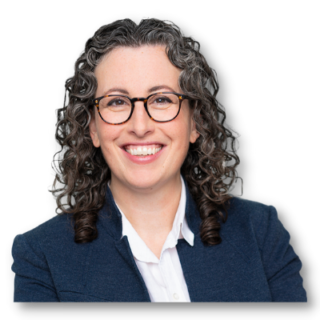
Jennifer Serravallo is the author of more than two dozen bestselling literacy resources for teachers. Her newest series, Whole Book Comprehension for Grades 1–6, which provides ready-to-go lessons for ELA, social studies, and science, is due out this fall. Each grade-level kit includes eight whole books, four fiction and four nonfiction titles, along with lesson-by-lesson writing prompts and instruction, rubrics, strategies, and conversation scaffolds for teaching them.
References
- Hwang, H., Cabell, S. Q., & Joyner, R. E. (2022). Effects of integrated literacy and content-area instruction on vocabulary and comprehension in the elementary years: A meta-analysis. Scientific Studies of Reading, 26(3), 223–249.
- Serravallo, J. (Host). (2023a, April 24). Dr. Tanya Wright—Vocabulary development, knowledge building, and comprehension (No. 10) [Audio podcast episode]. In To the Classroom: Conversations with Researchers & Educators. To the Classroom: Conversations with Researchers and Educators
- Serravallo, J. (Host). (2023b, May 1). Dr. HyeJin Hwang—Bidirectional relationship of knowledge and comprehension in mono- and multilingual learners (No. 11) [Audio podcast episode]. In To the Classroom: Conversations with Researchers & Educators. To the Classroom: Conversations with Researchers and Educators
- Serravallo, J. (Host). (2023c, September 4). Dr. Margaret McKeown—Vocabulary development, explicit vocabulary instruction, and the questioning the author intervention (No. 16) [Audio podcast episode]. In To the Classroom: Conversations with Researchers & Educators. To the Classroom: Conversations with Researchers and Educators