
The Classroom Essentials Series was created to provide pre-service and veteran teachers alike with a fresh new look at foundational, student-centered practices. Each book in the series focuses on one essential practice, along with all the information you need to get started trying it – or refining it – in your own classroom right away. With highly visual designs, classroom videos, online resources, teacher tips and more, Classroom Essentials books offer a uniquely engaging and contemporary reading experience for today’s busy teachers.
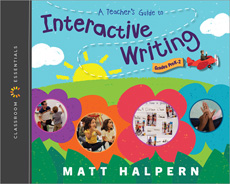
A Teacher’s Guide to Interactive Writing by Matt Halpern
A Teacher's Guide to Getting Started with Beginning Writers by Katie Wood Ray & Lisa Cleaveland
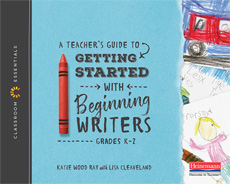
How can I help my youngest students become writers? How can I establish a routine for writing in my classroom? Why is making books developmentally appropriate? If you’re a new teacher or new to writing workshop, A Teacher’s Guide to Getting Started with Beginning Writers will show you in clear and simple terms what to do to establish a routine for writing in your classroom, offering you vision, insight, and practical support. If you’re an experienced workshop teacher, Katie and Lisa will help you imagine new possibilities.
A Teacher's Guide to Mentor Texts, K-5 by Carl Anderson
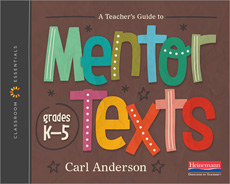
In this step-by-step guide, Carl Anderson shows you how to put teaching with mentor texts at the center of the way you teach writing in your elementary classroom. You’ll learn how to find just-right mentor texts for your students, analyze them for multiple craft and convention teaching points, and teach with mentor texts with your whole class, in small group lessons, and in writing conferences.
A Teacher's Guide to Reading Conferences by Jennifer Serravallo
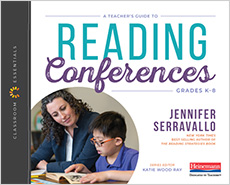
In this book, you'll read about the different types of student conferences. The book is organized in the order you’re most likely to use the conference types as you get started. Why are reading conferences so important? What do effective reading conferences look and sound like? How do I fit reading conferences into my literacy block? Jen Serravallo presents conferences for six specific instructional situations: assessing, goal-setting, strategy lessons, and more.
A Teacher's Guide to Writing Conferences by Carl Anderson
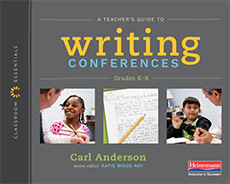
Helping students become better writers is what writing conferences are all about. How can I get started with conferring or improve my conferences? How can I fit conferences into my busy writing workshop schedule? How can conferences help me meet the diverse needs of student writers? In A Teacher’s Guide to Writing Conferences, Carl Anderson explains the underlying principles and reasons for conferring with students, and how to make writing conferences a part of your daily routine. With clear and accessible language, Carl guides you through the three main parts of a writing conference, and shows you the teaching moves and intentional language that can be used in each one.
A Teacher's Guide to Writing Workshop Essentials: Time, Choice, Response by Katherine Bomer & Corinne Arens
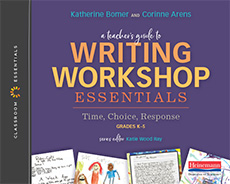
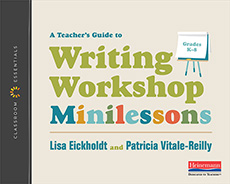
A Teacher's Guide to Writing Workshop Minilessons by Lisa Eickholdt & Patricia Vitale-Reilly
A Teacher’s Guide to Math Workshop by Nicki Newton, Alison Mello, & Janet Nuzzie
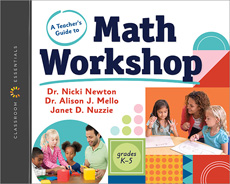
A Teacher’s Guide to Math Workshop shares a step-by-step process for implementing a math workshop in any classroom and with any math curriculum. Grounded in research-based best practices in math education, this introduction to math workshop is enhanced with classroom videos that bring the content to life. You’ll see students engaged in standards-based, differentiated, academically rich mathematics tasks and activities that help them see the value of math and make connections to math in their everyday lives. Vivid pictures, artifacts, classroom video, and writing from three expert educators show you the daily rituals and routines of math workshop: whole group instruction, small, guided math groups, and purposeful partner and individual math workstations.
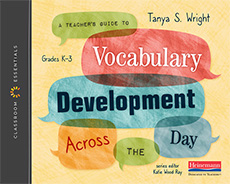
A Teacher’s Guide to Vocabulary Development Across the Day by Tanya Wright
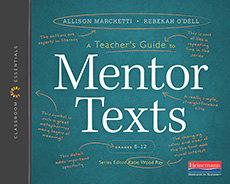
A Teacher’s Guide to Mentor Texts, 6-12 by Allison Marchetti & Rebekah O'Dell
Related Reading


The following is an excerpt from A Teacher’s Guide to Writing Workshop Minilessons by Lisa Eickholdt and Patricia Vitale-Reilly.
