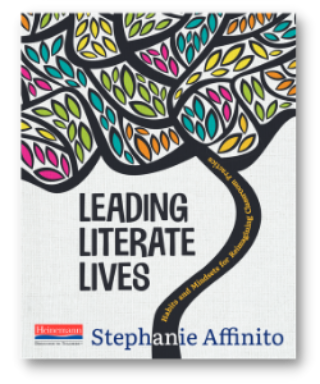
Adapted from Leading Literate Lives by Stephanie Affinito. This is part of our Bring Back Whole Book Reading series.
Years ago, I ended a mystery-reader session in a first-grade classroom by reminding students how important it was to find at least ten minutes a night to curl up with a good book. One little boy shot his hand in the air, waving for me to call on him. When I did, he blurted out as only a young, energetic child could: “Do you read ten minutes a night too, Mrs. A?” I stopped short because if I were honest, at that point of my life with three kids under three years old at home, I did not. Trying to hide my embarrassment, I told him that I tried to find those ten minutes just as he did and that sometimes it was easy and sometimes it was hard, but I would keep at it every day. Satisfied with the answer, he hopped off the carpet and went back to his seat. But that question haunted me. Here I was telling students to read every night and I could not hold myself to that same standard. Sure, I read for work and I read with children, but my personal reading life was sorely lacking. That moment with that young reader turned a page in my reading life, and I have worked ever since to maintain the kind of reading life that I can feel proud of in front of students. Now, the busyness of my life did not change. The dishes and laundry were still waiting for me, and my family did not lessen their busy schedule. Quite simply, I reprioritized reading in my life, and everything else fell into place. And by becoming a voracious reader myself, I better created a culture of literacy for the educators and students I worked with, something that must be lived, not only taught.
Give Habit Stacking a Try
We all engage in daily rituals and routines that determine the course of the day: how and when we wake up, get to work, fuel our bodies, keep the house clean, get our work done, take care of family members, head to bed, and many more. These habits are the unconscious tasks we engage in each day without fail and without thinking. But they are choices we’ve made—and those choices matter. They determine what we focus our time and energy on and how we feel as we proceed throughout our day. Since human beings tend to be creatures of habit, identifying those routines can work in our favor when attempting to grow our reading lives.
Let’s begin by thinking about your daily habits. What are the things you do each day without fail? What are your morning routines? How do you get to work? What does your after-school routine look like? How about dinner or bedtime routines? Each of our routines gives our brain a signal to do something next. For example, when you get out of the shower, you might automatically brush your teeth. Or when you sit down at dinner, you might automatically say grace with your family. Or, when you walk into the house, you take off your shoes and place them on a shoe rack (how I wish my children had that habit firmly in place!). James Clear (2018) calls this idea “habit stacking,” and we can use habit stacking to add a bit more reading to our lives as well. Here are a few ideas:
- After you turn on the coffee pot each morning, sneak in a few minutes of reading while the coffee brews (and then a few more taking those first heavenly sips).
- When you grab your lunch bag and head to lunch, grab the book you are reading, too.
- When you hop in the car to drive to school, listen to an audiobook to pass the time.
- When you grab the leash to walk the dog, open a podcast and listen to the latest book releases while you walk.
- When you sink down on the couch with your phone for some mindless scrolling, grab your book on the side table instead.
Think about your own routines and how you might pair one old habit with a new one. Try it for one week. If it doesn’t feel right, then try a new one. But remember, it takes at least twenty-one days to make something a new habit, so keep at it over time and pick yourself back up if you fall off the wagon.
Bring It to the Classroom
You can easily bring a new stacked routine to your classroom:
- Invite students to settle into the day with a good book. Add independent reading to their morning list of tasks and give students the gift of a soft start to the day.
- Add a read-aloud to snack time. Invite students to listen as they munch their snacks with classmates.
- Start independent reading time with a three-minute turn-and-talk to share reading selections with classmates.
- End the day with a book. Invite students to pack their bags for the ride home, grab their book, and settle in for five minutes of additional reading before leaving for the day.
These are just a few ideas, but get creative based on your own classroom schedule and routines. For example, teacher Leigh paired her classroom restroom routines with an additional read-aloud—really! In her school, classrooms take scheduled breaks to the restroom after lunch. Often frustrated by students’ extra-slow return from the restroom, she decided to read aloud in the hallway during this time. Not only did this build in extra time for reading, it encouraged students to return quickly to listen rather than dawdle.