Imagine reading instruction where students see themselves as readers—curious, confident, and engaged with books that matter to them. That’s the promise of the reading workshop model, a research‑based framework that gives students dedicated time and support to engage in authentic reading every day.
Grounded in student agency, daily practice, and responsive teaching, the reading workshop model empowers learners to take ownership of their reading lives while positioning teachers as mentors and guides.
What Is the Reading Workshop?
The reading workshop is a student‑centered instructional framework that combines explicit instruction with extended time for students to read whole texts. It creates a classroom environment where reading is purposeful, meaningful, and deeply engaging. Students learn to apply strategies, build stamina, and make meaning from texts while receiving guidance and feedback along the way.
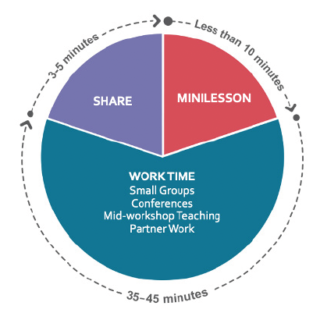
A typical reading workshop includes three key components:
- Minilesson: A short, focused teaching point where the teacher explicitly models a reading strategy or skill, often through a brief read‑aloud.
- Work Time: The longest part of the workshop, when students read independently or in small groups. Teachers provide differentiated support through conferring and flexible small‑group instruction.
- Share Time: Opportunities for students to reflect on their reading, share insights, and learn from their peers.
This structure helps students see themselves as part of a community of readers. Reading becomes more than an assignment—it becomes a habit that builds confidence, comprehension, and a love of books.
Why the Workshop Model Works
The reading workshop model succeeds because it prioritizes consistent, purposeful reading. At its core, this approach gives students the time and space they need to develop essential reading skills through authentic practice.
Here’s why it matters:
- Reading Growth Comes from Reading More: Research consistently shows that students who read more, read better. Daily, sustained reading builds fluency, vocabulary, stamina, and comprehension as students apply skills in real texts.
- Confidence and Stamina Grow Over Time: Regular reading practice helps students build endurance and self‑assurance. They learn how to tackle longer texts, follow complex ideas, and persist as readers.
- Differentiation Is Built In: While students read, teachers can meet with individuals or small groups to provide targeted instruction. This flexibility allows teachers to address decoding, fluency, vocabulary, or comprehension needs in responsive ways.
- Standards and Choice Work Together: Minilessons can align closely to grade‑level expectations, while student choice keeps engagement high. When students read books they care about, motivation and reading volume increase.
- Flexible Structure Supports Teachers: With predictable components—minilesson, work time, and share time—the model balances explicit teaching with independence. It works across subjects, alongside any core ELA program, and adapts easily to different schedules and classroom needs.
The Research Behind the Reading Workshop
The reading workshop model is grounded in decades of research showing that frequent, meaningful reading drives literacy growth. Studies consistently demonstrate that high‑volume reading, paired with explicit instruction, leads to gains in comprehension, vocabulary, and fluency.
Rather than replacing systematic instruction, reading workshop creates opportunities for students to apply phonics, vocabulary, and comprehension strategies in authentic texts. This integration supports skill transfer and reflects how lifelong readers develop—by reading daily, thinking deeply, and discussing texts with others.
Turning Classrooms into Communities of Readers
One of the most powerful aspects of the reading workshop model is the sense of belonging it creates. Classrooms become collaborative spaces where students take risks, share their thinking, and learn from one another. Conferences, partner talks, and shared reflections aren’t just instructional tools—they help build trust and celebrate growth.
If you’re ready to bring this dynamic, student‑centered approach to your classroom, our free ebook is the perfect place to start. Inside, you’ll find research‑based insights that show how reading workshop supports authentic reading, differentiation, and student engagement.
Download the free ebook now and discover a flexible workshop structure that supports daily reading, choice, and targeted feedback.
Get a research-backed roadmap for making reading workshop work.