Effective instruction in history should encourage students to build understanding by reading connected, meaningful texts that deepen knowledge, support comprehension, and invite analysis of ideas, perspectives, and evidence through inquiry.
When history is presented without clear connections, students may learn individual facts but miss the deeper meaning. Students should be asking why events mattered, how people experienced them, and how ideas connect across time. When history is taught as a rich body of knowledge shaped by real people, real questions, and real moments of change, comprehension grows alongside curiosity.
History Is More Than a Timeline
History comes alive when students experience it as a set of human experiences rather than a sequence of dates. When learners read across multiple texts on a shared topic, they begin to see how context shapes stories and understanding deepens. For example, when studying the American colonial era, students may read about the dangerous ocean voyage and early challenges colonists faced, while learning about the Native peoples who had already been living in North America for thousands of years. This broader view helps students understand that history is not a single narrative, but a collection of interconnected stories that gain meaning when studied together.
History instruction emphasizes reading to learn. Students read to make sense of complex ideas, evaluate sources, and build understanding over time. This kind of reading invites them to think like historians by asking questions, weighing evidence, and revisiting ideas as their knowledge deepens.
Knowledge and Comprehension Grow Together
Comprehension is not a standalone skill. Students understand texts more deeply when they have something to connect new information to. Each meaningful reading experience adds to a growing store of knowledge that supports future learning. For example, students who learned about the experiences of African slaves during the colonial era gained essential context for understanding the economic systems, social hierarchies, and moral debates that later fueled national tensions leading up to the Civil War.
When students read multiple texts on the same historical topic, they begin to integrate information across sources. They compare viewpoints, identify recurring themes, and refine their understanding as they encounter new details. Over time, this repeated exposure supports stronger comprehension because students are reading with purpose and building conceptual understanding. By continually adding to their knowledge base, they become more confident, capable readers who can make sense of increasingly complex ideas.
Active Literacy Builds Historical Literacy
In an active literacy classroom, students explore the past through engaging, high-interest texts paired with primary sources, images, and other visuals. Reading is one of the best ways to investigate the past. One primary source students might explore is the collection of letters written by America’s second First Lady, Abigail Adams. In her letters to her husband, John Adams, she described key moments of the American Revolution, such as the Battle of Bunker Hill.
As students annotate, question, summarize, and synthesize ideas across sources, they begin to read history critically. They compare perspectives, evaluate claims and evidence, and build lasting background knowledge. These practices help students turn information into understanding and support historical literacy in action.
This kind of instruction is intentionally thinking-intensive and inquiry-driven. Students paraphrase, analyze, infer, and react as they encounter new information. By engaging with history through multiple texts and media, they deepen their understanding of why events mattered and how different people experienced them.
Reading History with Curiosity and Purpose
Effective history instruction invites students into inquiry-based learning. Students explore questions that historians ask, using texts, images, and artifacts to annotate, interpret, and investigate the past:
- Who created this, and why?
- What perspectives are represented, and which are missing?
- How does this source connect to others we have read?
For example, while studying the Westward Expansion, students might read about the Northwest Ordinance, an important piece of legislation that guaranteed new states in the west would be equal to the original thirteen states. As they read, students may notice that Native Americans weren’t included in these decisions. This often leads them to learn more about Indigenous perspectives, where they see how conflicting views about land and ownership created major tensions, echoing similar conflicts from the colonial era.
Short, focused nonfiction texts can support this work by allowing students to read widely in manageable, meaningful chunks. When texts are paired thoughtfully, students have opportunities to revisit ideas, refine interpretations, and develop a more nuanced understanding of the past.
Making Space for Multiple Perspectives
History is shaped by many voices, including those that are often not talked about enough. Reading across sources helps students recognize that historical events were experienced differently depending on who you were and where you stood.
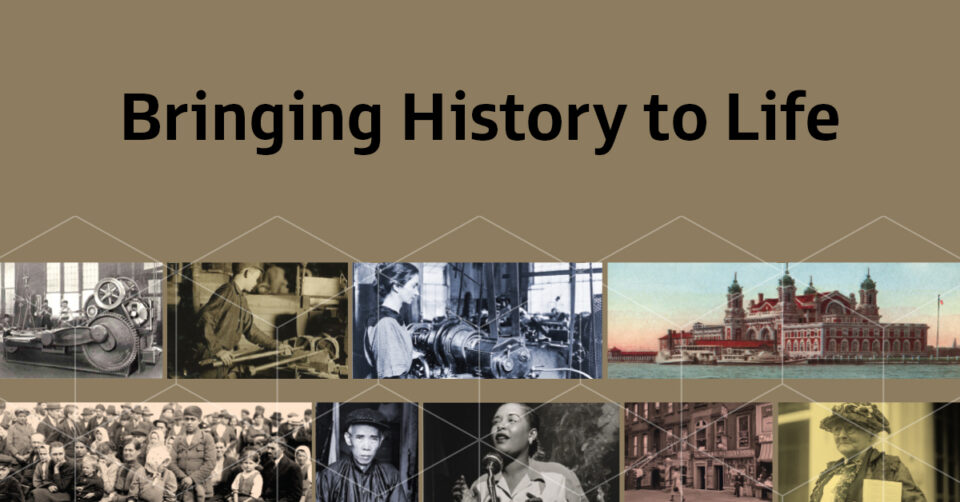
The Industrial Age, for example, had many different perspectives that define this period of rapid change. Students might read immigrant accounts from families arriving at Ellis Island, learn about the daily work of child laborers in mines and mills, or examine the contributions of often overlooked women investors.
When students encounter a range of perspectives, they learn to question single stories and simplistic explanations. This work strengthens comprehension while also supporting critical thinking and civic understanding.
Bringing History into the Literacy Block
For many teachers, the challenge is not whether history matters, but how to fit it into daily instruction. Integrating history texts into literacy time can be a powerful way to address both content learning and comprehension goals.
Reading history texts aloud, studying images and primary sources, and revisiting a topic across several days gives students repeated opportunities to engage deeply with ideas. These practices support vocabulary, background knowledge, and comprehension without requiring a separate block of time.
History Should Be an Invitation to Explore
When history instruction is engaging, students begin to see the past as something worth investigating. They read with curiosity, talk with purpose, and develop a deeper understanding of how history shapes the world they live in today.
The Short Nonfiction for American History Series uses engaging articles, historical images, and primary sources to guide students through targeted comprehension strategy lessons. By working with a variety of rich texts, students build strong historical background knowledge, deepen their comprehension and literacy skills, and develop the critical thinking needed to understand and interpret the past.
Explore a digital sample of the American History Series and see how it supports meaningful literacy instruction using authentic American history texts.
Learn how the American History Series inspires inquiry and curiosity.