Artificial intelligence is already shaping how teaching and learning happen in K–12 classrooms—often faster than guidance, policy, or professional learning can keep pace. As a result, educators are navigating real and urgent questions about ethics, trust, academic integrity, workload, and appropriate use, frequently without clear or consistent support.
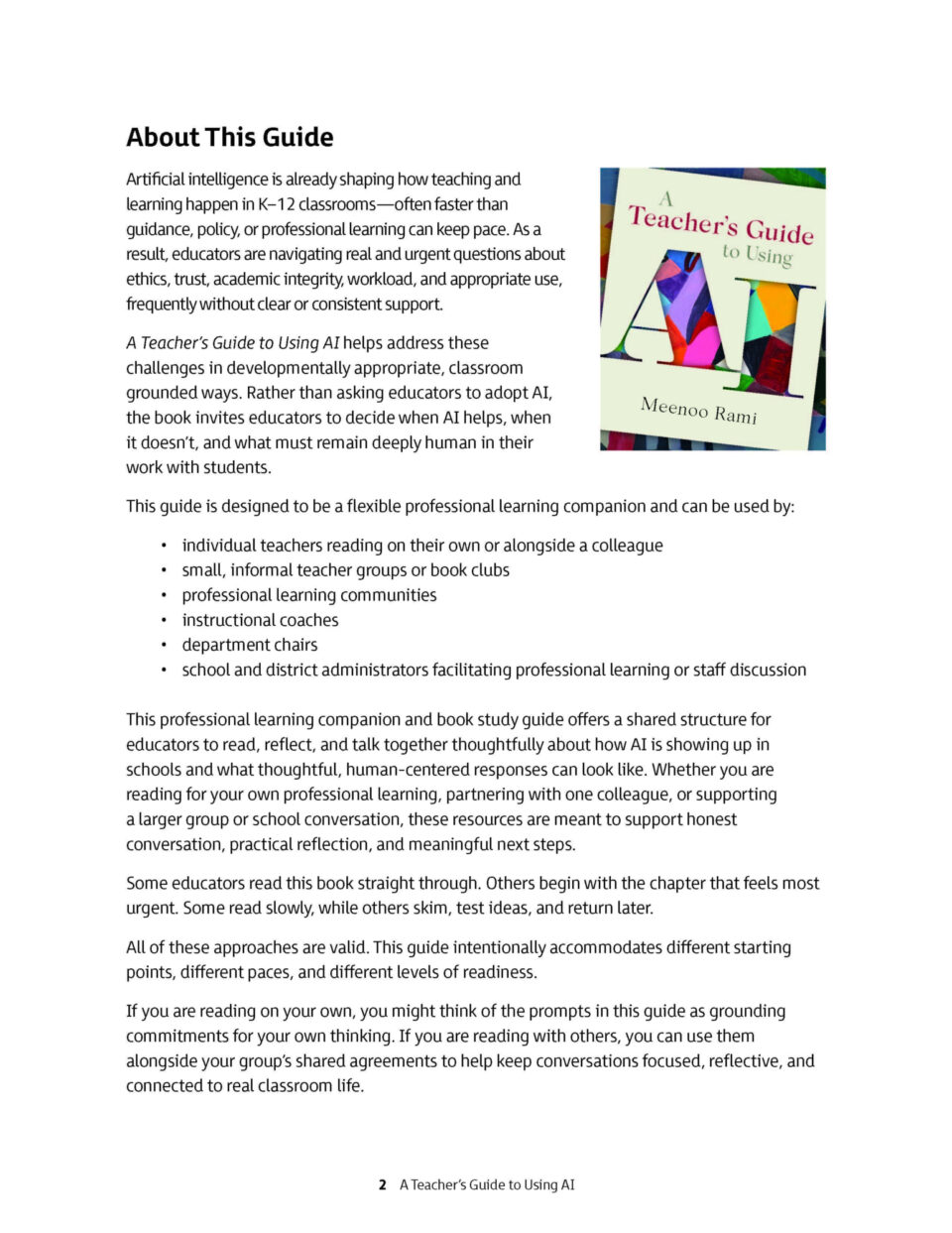
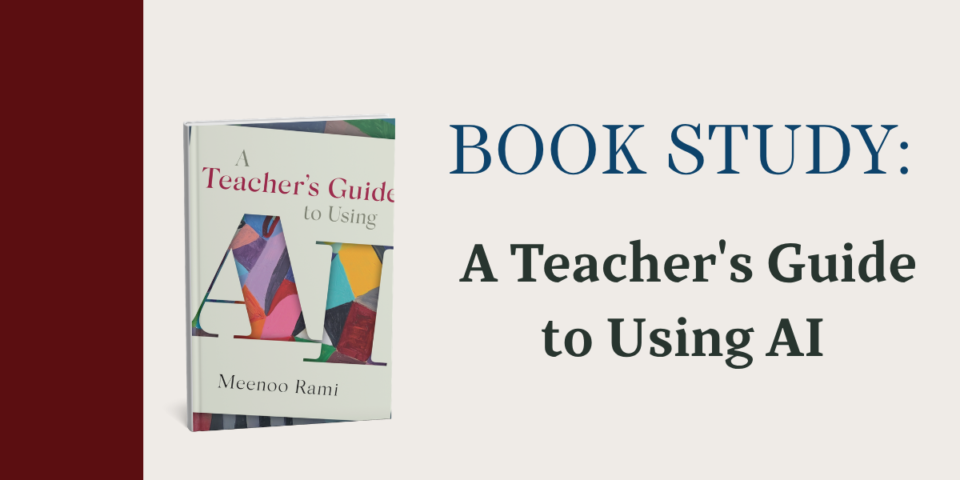
A Teacher’s Guide to Using AI helps address these challenges in developmentally appropriate, classroom grounded ways. Rather than asking educators to adopt AI, the book invites educators to decide when AI helps, when it doesn’t, and what must remain deeply human in their work with students.
This guide is designed to be a flexible professional learning companion and can be used by:
- individual teachers reading on their own or alongside a colleague
- small, informal teacher groups or book clubs
- professional learning communities
- instructional coaches
- department chairs
- school and district administrators facilitating professional learning or staff discussion
This professional learning companion and book study guide offers a shared structure for educators to read, reflect, and talk together thoughtfully about how AI is showing up in schools and what thoughtful, human-centered responses can look like. Whether you are reading for your own professional learning, partnering with one colleague, or supporting a larger group or school conversation, these resources are meant to support honest conversation, practical reflection, and meaningful next steps.
Some educators read this book straight through. Others begin with the chapter that feels most urgent. Some read slowly, while others skim, test ideas, and return later.
All of these approaches are valid. This guide intentionally accommodates different starting points, different paces, and different levels of readiness.
If you are reading on your own, you might think of the prompts in this guide as grounding commitments for your own thinking. If you are reading with others, you can use them alongside your group’s shared agreements to help keep conversations focused, reflective, and connected to real classroom life.
Download the guide by clicking the image or link below: