by Marilyn Pryle. This is the second entry in the Bring Back Whole Book Reading series.
Recently, an ELA teacher told me this story: She was holding a book at her desk, looking through the pages for a certain passage. One of her students eagerly came up to her and said, “Oooo, are we going to read a book?”
The only book the student was used to seeing in his ELA class was his all-encompassing workbook, which contained short stories, articles, poetry, and excerpts from longer pieces, none of which he associated with “books.”
Perhaps this scenario sounds familiar to you. Or perhaps you’ve seen an uptick in media coverage and social media posts about students not being assigned whole books in school anymore, often with the conclusion that this is a failing on teachers’ part. In truth, the teachers I know would love nothing more than to read whole books that children fall in love with (and if you’re reading this, I’m sure you could name several). But the reality is that there is no time in the age of overly-scaffolded, required curriculums that are purchased and then imposed on schools and teachers.
In many schools, teachers are under immense pressure to keep up with pacing guides that come with the curriculum their district has purchased for them. No teacher wants to look like they are “falling behind,” neither with their administrators nor with their peers. This squeezes out time that would be instead be spent on things like responsive teaching, organic creative activities, or reading actual books for pleasure.
Even programs that use a whole book as the cornerstone for a unit can limit the number of books students read. First, in most cases, the amount of time the pacing guide spends on a single book is just too long: often, about eight weeks. Students either plod through the book at the pace of the pacing guides, or actually become interested, read the whole book on their own, and then suffer through six more weeks of supplemental activities. Even if students love the book in the beginning of the unit, they are tired of it by the end.
Second, the book is the choice of the company, not the student. If we want students to be genuine, lifelong readers, we must provide physical and temporal space for students to a) figure out what they might like to read, b) read it, and c) change their minds if they want to. There is no room for this when students have no choice in what they read.
Third, with this model, students are only permitted to experience books under the explicit framework of “skills.” An anchoring book is dissected, labeled, and tested ad nauseum. There are no “tear-throughs,” books that they read in an enthralled blur because they can’t put them down. Instead, a book is skilled to bits and quizzed beyond recognition.
Teachers want nothing more than to see students excited about reading. We want to see them take ownership, genuinely explore, and authentically discuss books. We want them to think of themselves as readers. In reality, we’re seeing that many students are checking the boxes we force them to check in our ELA classes. Some have checked out entirely.
When I asked teachers what they would do if they were allowed to do whatever they wanted in their classrooms, many of them told me things like, “I would love to read aloud different books I know they’d love,” or “I’d love to do book clubs so they could choose books,” or even, “I’d love to let them write in journals about whatever they want.” Teachers feel like these simple activities, once so common in classrooms, are no longer possible with all of the official curriculum they must cover in a day. This is a sad reminder that purchased, required curricula not only diminish students’ sense of ownership of their reading lives but also teachers’ sense of ownership of their practice.
While you might not be able to, or want to, change your whole curriculum, there are some small things you can do to connect students with whole books:
- If your school permits classroom libraries, compile a library and give students 5-10 minutes of browsing and reading time most days; read aloud to them from different books for low-stakes exposure. Even a rotating collection of books you choose from the school library or your local library will give students options.
- Start Book Clubs in addition to your curriculum, giving students 10 minutes to read books of their choice at the beginning of each class. To find the time, work with your department chair, literacy coach, or curriculum coordinator to trim parts from your curriculum without sacrificing standards. It can be done!
- Often, the assessments in purchased curriculums take days. Work with your department chair, literacy coach, or curriculum coordinator to streamline these assessments, and use the time for choice reading, book browsing in the library, book speed-dating, or read alouds.
- Teach students skills about how to find books that they like. Show them how to search for similar genres on book resellers’ sites or on book recommendation sites; let them explore book reviews; direct them to author sites; show them their local library web page.
- Have students write actual reviews after they’ve read a book. This gives them a sense of voice and ownership; it lets them feel like their opinion matters in a world beyond the classroom. These reviews could become a section on the class or school website, or posters in the hallway.
Trust your instincts and expertise. Even a small space for choice; for low-stakes, untested exploration; and for real enjoyment, can help students develop more authentic relationships with whole, actual books and can help them to become lifelong readers.
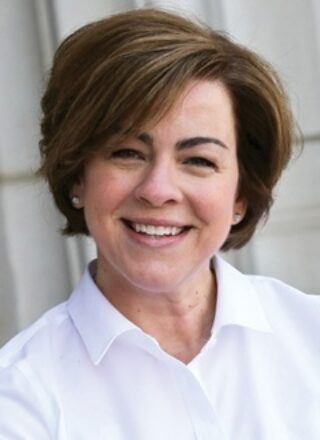
Marilyn Pryle is a National Board Certified Teacher with over 25 years of experience in education. She teaches 10th grade English in Clarks Summit, PA, and is the author of several books for teachers, including 5 Questions for Any Text, Reading with Presence, and 50 Writing Activities for Meeting Higher Standards. Marilyn holds an Ed.D. in Curriculum & Instruction and was the 2020 Pennsylvania Teacher of the Year.