Adapted from Point-less by Sarah Zerwin.
Readers and writers need authentic reasons to work, and when you’re not focused so much on the kinds of products that are easy to score with points, there’s an entire world of new possibilities out there. It’s wonderfully liberating to think about: Free of the constraints of grading, what authentic assignments and assessments might be possible? What is your richest vision for the work students might do in your classroom?
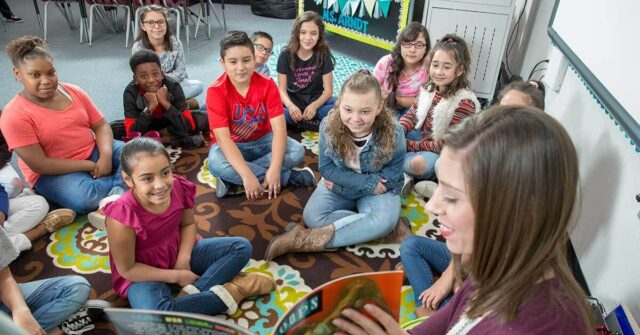
Let’s start with reading. What if you asked students to read a book so they could have a conversation with you about it? Not for an exam or to write a paper, but to sit in a small group of classmates who had also read the book and just talk about it.
What if you gave students the questions ahead of time so they could reflect: What do you think the text argues about the human experience? How does it make that argument? Is it a true statement about life? If so, how does it change you as a human being? (Edmundson 2002). What if you used conferences and informal writing along the way to help students focus their thinking on the questions and get ready for the conversation?
Can you imagine a conversation that feels like you’re sitting around the dinner table talking about life, inspired by a book assigned in school, and just because you said you would be having the conversation? You could participate in the conversation as a fellow reader since you wouldn’t have to worry about doling out points and evaluating what students say. You could listen to see what you might learn about your students’ growth as readers. And the conversation models the kinds of conversations students could have with people about books for the rest of their lives.
This is the kind of classroom activity that builds readers, but the moment you start awarding points for something like this, it loses its power. In this case, it would no longer be a group of readers having a meaningful conversation about a shared text. It would be a group of students competing with one another for points, saying the things they think the teacher wants to hear. When you approach grades differently, however, a structure like this becomes possible.
Now let’s think about writing. For years I struggled through stacks of papers, especially the big, culminating, end-of-semester ones, alone. I had to determine a grade on each paper to figure into students’ final grades. I spent a lot of my grading energy justifying the points I took off based on a rubric. It was exhausting, and I always worried that it sent the wrong message to students for me to be the only audience for a piece of writing that supposedly reflected the culmination of their work for an entire semester.
Now that I don’t put points and grades on individual pieces of writing, I’ve been able to invite students to do much more authentic activities with their writing. For example, last year my students wrote magazine-style feature pieces about topics they chose. We spent an entire semester on the feature genre—unpacking how it weaves together both narrative and informational writing into one complex, engaging text. We read and studied mentor texts. We discovered ideas. My students wrote and revised and wrote and revised some more as I worked alongside them, offering feedback and conversation to help them craft a piece that met their goals.
Only a few years ago, the end game with these feature pieces would have been a final draft that I scored with a rubric, but letting all that go helped me imagine totally new possibilities. I challenged my students to become the staff of a magazine, organized into sections, with a pair of co–editors in chief who figured out what the overall focus of their magazine would be. The students in each section had to read each other’s features to figure out why they had been grouped together (providing feedback for yet more revision in the process) so they could design a cover page for their section. They worked together to lay out their sections using free, online design software. I pulled their sections into one PDF with the cover page that the co–editors in chief designed.
And even the final version of the magazine wasn’t our end point. For the final exam, each student was assigned to read one other student’s feature, write a letter in response, and then use that letter as an entrance ticket into a Socratic Seminar using their class magazine as the text up for discussion. Each student got an extensive, personalized response—from a peer, which is often more valuable to them than from their teacher. The class worked together to create something they were proud of having made, and the final exam conversation became a real celebration of their work.
Reflection
If you didn’t have to evaluate everything your students did for the purpose of putting points in the grade book, what kinds of authentic assignments and assessments might be possible? For each of your learning goals, consider the following questions:
- What practice will students need to accomplish the learning goal?
- What work will you ask students to do?
- Which of your traditional accountability measures could you repurpose to serve your learning goals?
- What new, more authentic tasks can you imagine asking your students to do?
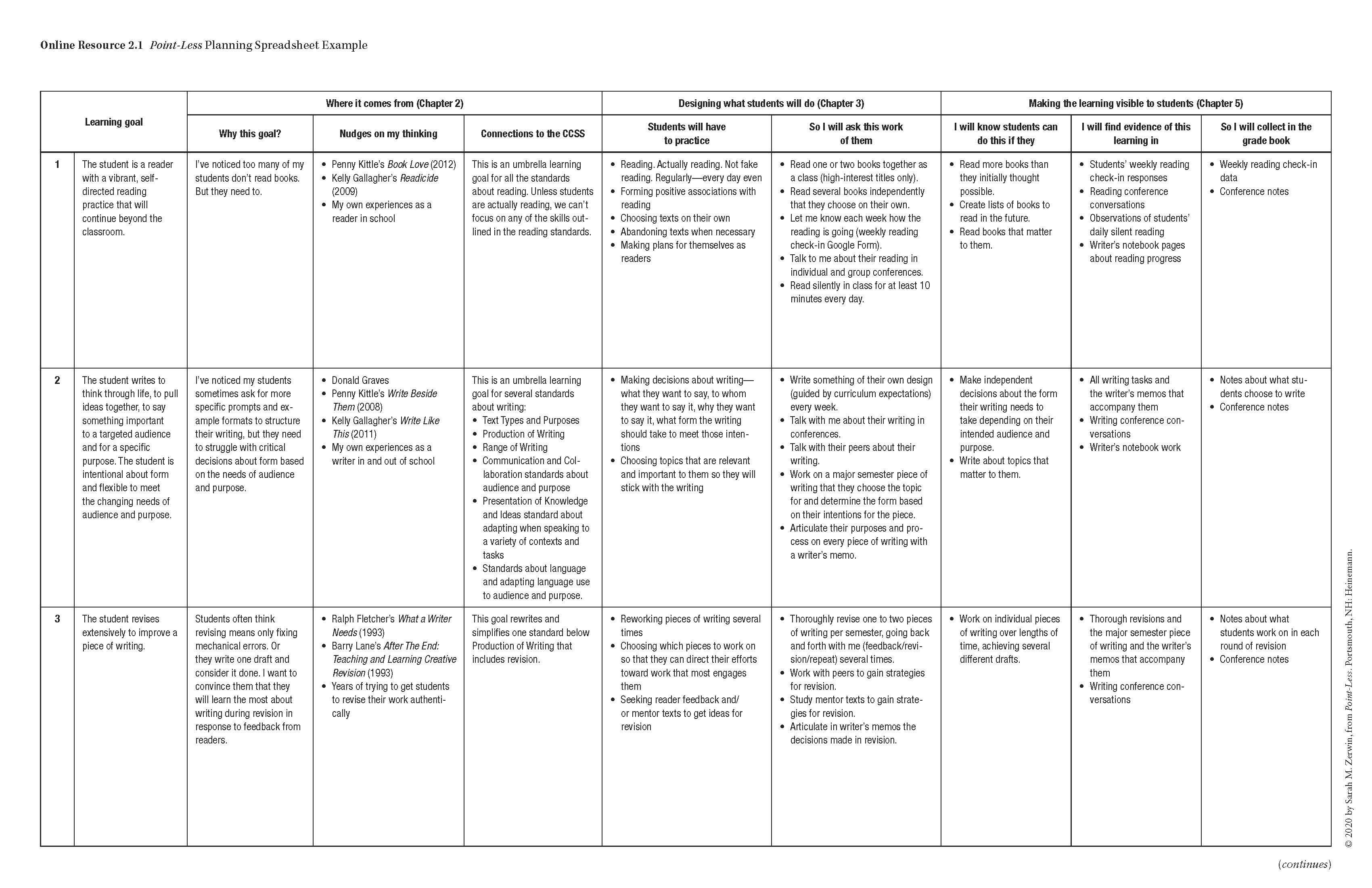
See a sample plan of the work my students will do: