By this point in the school year, you and your students are probably both counting down the days until summer. But if you're like most teachers, there's a little voice in the back of your head wondering, "How do I keep the momentum going?"
Research shows that over the summer, many students can lose reading and writing progress they worked so hard to build. But you don’t need to send them home with a stack of assignments. There’s a sweet spot between "Here's your summer homework" and "See you in September." That sweet spot? Setting your students up with books they'll actually want to read and simple writing ideas that feel more like a personal choice than a school assignment.
The key is making it personal. Every student has different interests, strengths, and areas to grow. When students choose their own books and writing ideas, they’re far more motivated to stick with it. Invite them to reflect on what they’ve been reading and writing and make a plan for where they want to go next. When students work with an authentic purpose — to learn something new, enjoy a great story, or improve a skill — they’re more likely to keep it up on their own.
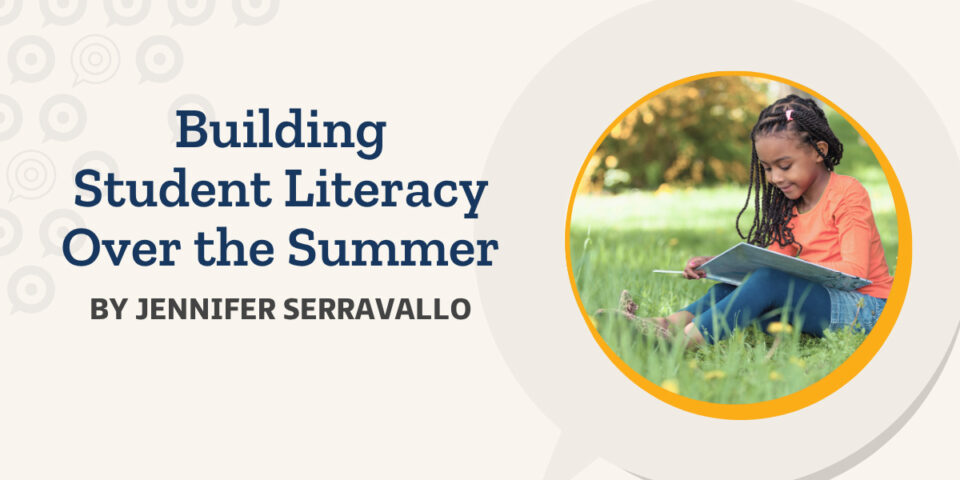
Help Students Get in the Reading Zone this Summer
How can you help every student find their reading zone — that wonderful state where they’re so caught up in a book that the outside world fades away? True engagement starts with finding the right books. Sit with each student before the break and develop a short list of summer reads based on their interests, preferred genres, reading ability, and skills they want to work on.
When building that summer reading list, make sure whole books are at the center of it. Whole books do something shorter texts simply can’t: they ask readers to hold a story or argument across hundreds of pages, track how characters grow, and build deep reading stamina. In a 2019 study by Westbrook and colleagues, teachers who spent twelve weeks reading two complete, complex novels with their students saw remarkable results. Students reading at grade level made around eight and a half months of progress — and those reading below grade level made sixteen months of progress in just twelve weeks, coming out of the experience seeing themselves as real readers. That shift in self-belief is exactly what summer reading can offer when students are given whole books they’re genuinely invested in.
But a great book is only part of the equation. Over the summer, there’s no teacher to redirect a wandering mind or nudge a reluctant reader back on track. That’s why students need to leave with strategies they can use independently: tools that help them stay focused, self-monitor when their attention drifts, and build stamina for longer stretches. Before the break, revisit strategies that help students monitor their own engagement and recommit when motivation dips. Here are a few to keep readers going all summer long.
- Set a small goal before reading — a time limit or a stopping page. When students reach it, they take a quick break, then get back to it. Simple, but it works. (Strategy 2.16)
- Everyone’s mind wanders. Students who know how to self-monitor can commit to refocusing by saying "No — not now." Then quickly retell what they remember reading so they can jump back in. (Strategy 2.18)
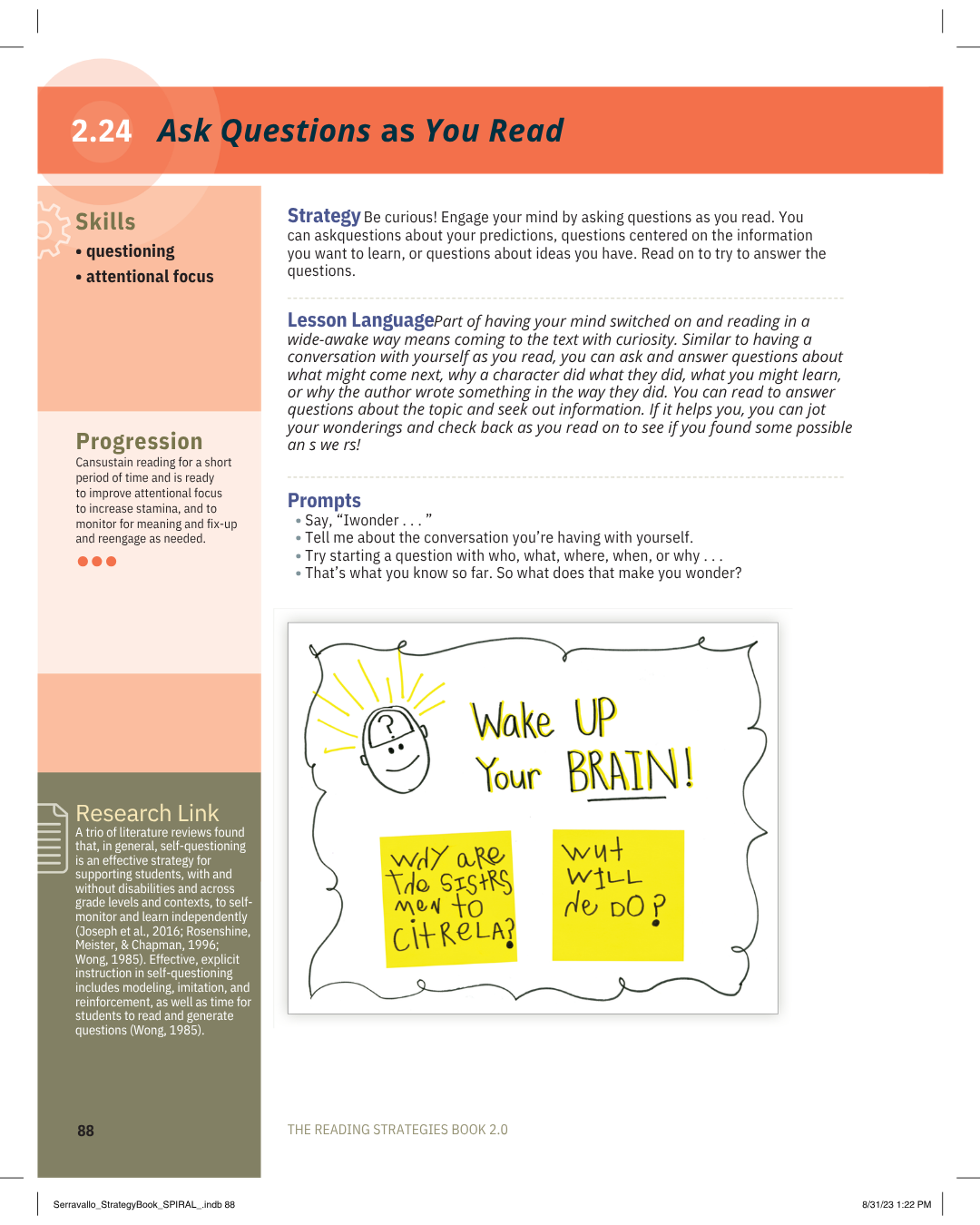
Encourage students to be curious. When students ask questions as they read — about predictions, information they want to learn, or ideas they have — they’re motivated to read on to find the answers. (Strategy 2.24; below)
Help Students Build a Summer Writing Life
Teaching students to tap into their passions, observations, and memories makes them independent, self-directed writers — and writing builds on itself. Give students a fresh notebook with key strategy reminders tucked inside. Sending them off with a notebook already full of possibilities means they have somewhere to start when inspiration strikes over the summer.
Here are two of my go-to strategies for helping students generate writing ideas — great to teach before the break, and simple enough for students to use all summer long.
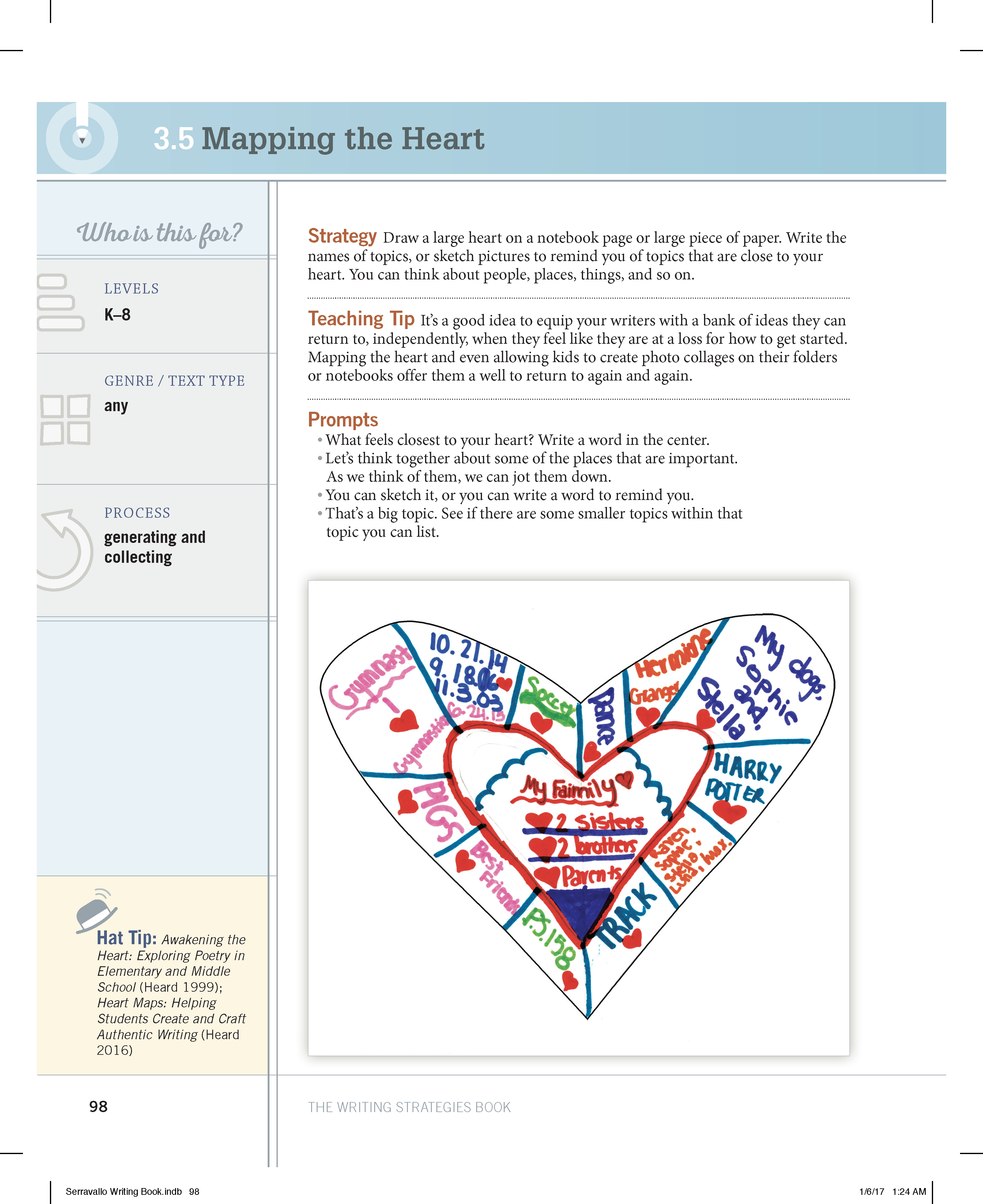
- Draw a large heart in your notebook and fill it with people, places, things, and topics that matter most to you — words or small sketches. Whenever you’re not sure what to write about, come back to your heart map. (Strategy 3.5)
Picture a place that matters to you — somewhere you’ve been or imagined. Think about what you see, hear, smell, and feel there. Jot down details and let those notes become your starting point for writing. (Strategy 3.17)
The strategies you teach before the break can be ones students carry with them all summer long. When they leave with the right books (or a curated list) in hand, a fresh notebook filled with ideas to get them started, and a few simple tools to keep themselves going, summer becomes less of a pause and more of a meaningful, joyful continuation of learning.
For deeper professional learning, Jennifer Serravallo’s The Reading Strategies Book 2.0 and The Writing Strategies Book offer extensive, classroom-ready strategy collections for readers and writers at every level. Coming in October, Jen’s Whole Book Comprehension series (grades 1–6) provides grade-specific guidance for teaching whole book reading, with complete books for each grade level — an incredibly practical resource for teachers ready to dive into authentic, extended reading experiences. Learn more about Jen’s professional learning literacy resources.

Jennifer Serravallo is the author ofThe New York Times' bestselling The Reading Strategies Book 2.0 and The Writing Strategies Book. These and some of her other titles have been translated into Spanish, French, Italian, and Chinese. Her popular books and resources help teachers make goal-directed, responsive, explicit strategy instruction doable in every classroom. Her newest titles are The Reading Strategies Book 2.0; Teaching Writing in Small Groups; A Teacher’s Guide to Reading Conferences, and the assessment and teaching resource Complete Comprehension for Fiction and Nonfiction.
Jen is a frequently invited speaker at national and regional conferences. She and her team of literacy specialists travel throughout the US and Canada to provide full-day workshops and to work with teachers and students in classrooms. She and her team are also experienced online educators who regularly offer live webinar series and full-day online workshops.
Jen began her career in education as an NYC public school teacher. Now as a consultant, she has spent the last twenty+ years helping teachers across the country create literacy classrooms where students are joyfully engaged, and the instruction is meaningfully individualized to students' goals. Jen served as a member of Parents Magazine Board of Advisors for education and literacy, and is on the NYC Reads Advisory Council as the city works to bring Science of Reading, Writing, and Learning-based practices to every classroom.
Jen holds a BA from Vassar College and an MA from Teachers College, where she has also taught graduate and undergraduate classes.
Learn more about Jen and her work at Hein.pub/serravallo, on Twitter @jserravallo, or Instagram @jenniferserravallo.